The International Mobile Subscriber Identity (IMSI) is a globally standardized unique number used to identify a mobile subscriber within a cellular network. It is defined in ITU-T Recommendation E.212 and is a fundamental component of the subscriber’s identity within the mobile telecommunications system.
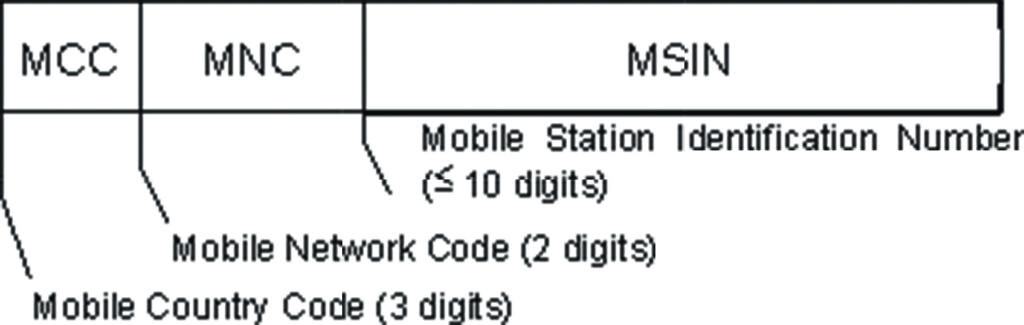
The IMSI is comprised of three main components:
- Mobile Country Code (MCC): The MCC is a three-digit code that identifies the country where the mobile subscriber’s SIM card was issued or registered. Each country is assigned a unique MCC, allowing for international identification.
- Mobile Network Code (MNC): The MNC is a two- or three-digit code that further refines the identification of the mobile network operator within the country identified by the MCC. The combination of MCC and MNC uniquely identifies the mobile network within a specific country.
- Mobile Station Identification Number (MSIN): The MSIN is a variable-length number that distinguishes individual mobile subscribers within a particular mobile network. It is typically assigned by the mobile network operator and serves as a subscriber’s unique identifier within that network.
Together, the MCC, MNC, and MSIN form the IMSI, which is stored on the subscriber’s SIM card. The IMSI is used for various purposes within the mobile network, including subscriber authentication, location tracking, and routing of calls and data to the appropriate mobile device.
It’s important to note that the IMSI is sensitive information and plays a crucial role in ensuring the security and proper functioning of mobile communication systems.