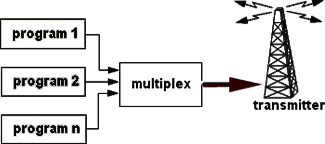
A multiplex, often abbreviated as “mux,” is a fundamental concept in telecommunications and broadcasting that involves combining multiple input signals into a single output signal. Multiplexing is used to efficiently utilize available resources, such as bandwidth or time, and is essential for various communication and broadcasting systems. Here are some key aspects of multiplexing:
- Types of Multiplexing:
- Frequency Division Multiplexing (FDM): In FDM, the available bandwidth is divided into multiple non-overlapping frequency bands or channels. Each input signal is allocated to its own frequency band. This method is commonly used in analog communication systems like traditional radio broadcasting.
- Time Division Multiplexing (TDM): TDM divides time into discrete intervals or slots. Each input signal is assigned to a specific time slot, and they are transmitted sequentially. TDM is commonly used in digital communication systems, such as voice calls in a telephone network.
- Code Division Multiplexing (CDM): CDM allocates the entire available bandwidth to each input signal but uses unique codes to distinguish between them. This method is commonly associated with technologies like CDMA (Code Division Multiple Access) used in cellular networks.
- Applications:
- Telecommunications: Multiplexing is used to combine multiple voice or data streams onto a single transmission medium, optimizing the use of available resources in networks.
- Broadcasting: In digital broadcasting, multiplexing is used to combine various audio and video channels into a single transport stream for transmission over the airwaves. This allows for efficient utilization of spectrum.
- Networking: Multiplexing is employed in computer networks to combine multiple data streams onto a shared communication channel, enhancing network efficiency.
- Benefits:
- Efficiency: Multiplexing enables the simultaneous transmission of multiple signals or data streams over a shared resource, reducing the need for separate dedicated channels.
- Cost Savings: By multiplexing multiple signals onto a single channel, organizations can save costs associated with infrastructure, cabling, and equipment.
- Digital Broadcasting Example:
- In digital broadcasting, such as DVB (Digital Video Broadcasting), multiple television or radio channels are multiplexed into a single transport stream. This stream includes both audio and video content, as well as service information for program details.
- Viewers receive this multiplexed stream and use their digital receivers to demultiplex and decode the specific channel they wish to watch or listen to.
Overall, multiplexing plays a crucial role in efficiently utilizing communication resources, whether it’s for voice calls, data transmission, or broadcasting, making it an essential concept in modern telecommunications and broadcasting systems.
An ‘old’ analogue broadcasting station.
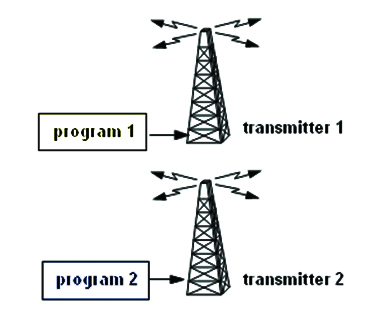
A digital broadcasting station.